

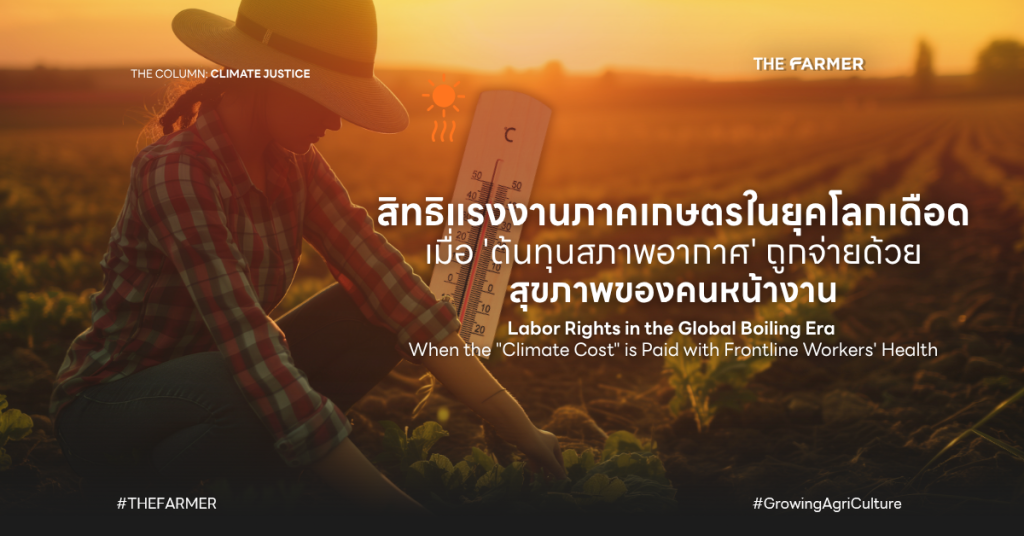
THE COLUMN:สิทธิแรงงานภาคเกษตรในยุคโลกเดือด: เมื่อ ‘ต้นทุนสภาพอากาศ’ ถูกจ่ายด้วยสุขภาพของคนหน้างาน
THE COLUMN: Agricultural Labor Rights in the Global Boiling Era — When the “Climate Cost” is Paid with Frontline Workers’ Health
⸻
(English is below)
⸻
“ขณะที่เป้าหมายรักษ์โลกถูกกำหนดขึ้นในห้องประชุมที่เย็นฉ่ำ แต่การลงมือทำกลับตกอยู่กับคนหน้างานท่ามกลางอุณหภูมิที่ร้อนระอุ ‘ความยุติธรรมทางสภาพภูมิอากาศ’ (Climate Justice) จึงไม่ใช่แค่การลดคาร์บอน แต่คือการไม่ทิ้งภาระทางสุขภาพไว้กับกลุ่มคนที่เปราะบางที่สุดในห่วงโซ่อุปทาน”
เมื่อผลกระทบโลกเดือด ตกอยู่กับคนที่เปราะบางที่สุด ในสมการความยั่งยืน ESG (Environmental, Social, Governance) องค์กรธุรกิจส่วนใหญ่มักทุ่มสรรพกำลังไปที่การจัดการก๊าซเรือนกระจก จนอาจหลงลืมแก่นแท้ของ Climate Justice หรือ “ความยุติธรรมทางสภาพภูมิอากาศ” ซึ่งตั้งอยู่บนความเป็นจริงที่ว่า กลุ่มคนที่ปล่อยก๊าซเรือนกระจกน้อยที่สุด มักเป็นผู้ที่ต้องรับผลกระทบจากสภาพอากาศรุนแรงที่สุด
ในภาคการเกษตร ความไม่เป็นธรรมนี้สะท้อนชัดเจนผ่านมิติ Social ของ ESG และเชื่อมโยงกับ Governance ผ่านการกำกับดูแลแรงงานและห่วงโซ่อุปทาน เมื่อโลกก้าวเข้าสู่ภาวะโลกเดือด (Global Boiling) แรงงานรายย่อยต้องทำงานกลางแจ้งท่ามกลางอุณหภูมิที่สูงขึ้น หากราคารับซื้อหรือโควตาผลผลิตไม่เปิดพื้นที่ให้สะท้อนต้นทุนด้านความปลอดภัยและการปรับตัวต่อความร้อน ห่วงโซ่อุปทานก็อาจเพิ่มแรงกดดันให้แรงงานต้นน้ำต้องเลือกระหว่างการรักษารายได้กับการปฏิบัติตามมาตรการความปลอดภัย ซึ่งการละเลยสิทธิแรงงานนี้ ไม่เพียงอาจขัดต่อหลักการด้านสิทธิมนุษยชนและอาชีวอนามัยตามบริบทของกฎหมายและมาตรฐานที่เกี่ยวข้อง แต่ยังเป็นความเสี่ยงต่อประสิทธิภาพการผลิต (Productivity) และเสถียรภาพของธุรกิจในระยะยาว

⸻
Deep Dive / Mechanism: ถอดรหัสความไม่เป็นธรรมในโครงสร้างต้นทุนมนุษย์
The Physical Climate Tax (ภาษีสภาพอากาศที่จ่ายด้วยร่างกาย) เมื่อภาระความร้อนจากสภาพแวดล้อมและการทำงานสูงขึ้นจนร่างกายระบายความร้อนได้ไม่ทัน แรงงานมักต้องลดการทำงานและพักบ่อยขึ้นเพื่อหลีกเลี่ยงการเจ็บป่วย ส่งผลให้ผลิตภาพแรงงาน (Labor Productivity) ลดลง การที่สภาพอากาศบีบให้ผลิตภาพลดลงแต่แรงกดดันด้านรายได้ยังคงบีบรัด ถือเป็นการผลักภาระที่อาจเปรียบได้กับ “ภาษีสภาพอากาศ” (Physical Climate Tax) ไปตกที่หยาดเหงื่อและขีดจำกัดทางร่างกายของแรงงาน (คำว่า ภาษีสภาพอากาศ ในที่นี้ใช้เพื่อเปรียบเทียบถึงต้นทุนด้านสุขภาพและรายได้ที่แรงงานต้องแบกรับ ไม่ใช่ภาษีตามกฎหมาย) ทั้งนี้ ระดับความเสี่ยงไม่ได้ขึ้นกับอุณหภูมิเพียงอย่างเดียว แต่ยังขึ้นกับความชื้น ระยะเวลาการทำงาน ลักษณะงาน และการเข้าถึงน้ำ ร่มเงา และเวลาพักด้วย
The Unbalanced Safety Net (ตาข่ายรองรับความเสี่ยงที่ไม่เท่าเทียม) แรงงานเกษตรและแรงงานข้ามชาติบางกลุ่มอาจมีข้อจำกัดในการเข้าถึงสวัสดิการ ประกันสุขภาพ และการชดเชยรายได้ เมื่อเปรียบเทียบกับลูกจ้างในองค์กรที่อยู่ในระบบ ทำให้ความเสี่ยงด้านสุขภาพจากความร้อน (Heat Stress) เช่น ภาวะขาดน้ำและผลกระทบสะสมจากการทำงานในความร้อน อาจกลายเป็นภาระค่าใช้จ่ายและรายได้ที่สูญเสียของครัวเรือน ต้นทุนแฝงเหล่านี้เป็นต้นทุนทางเศรษฐกิจที่อาจตอกย้ำความเหลื่อมล้ำในการรับมือกับวิกฤตภูมิอากาศ
The Compliance & Reputational Risk (ความเสี่ยงที่ธุรกิจต้องร่วมรับผิดชอบ) การปล่อยให้คนงานทำงานในภาวะเสี่ยงโดยไม่มีการประเมินและมาตรการควบคุมที่เหมาะสม อาจก่อให้เกิดความเสี่ยงด้านอาชีวอนามัย (Occupational Health) อาจก่อให้เกิดความเสี่ยงด้านการไม่ปฏิบัติตามกฎหมายที่เกี่ยวข้อง หรือไม่ผ่านข้อกำหนดด้านแรงงานและความยั่งยืนของคู่ค้าปลายทาง และอาจลุกลามไปสู่ความเสี่ยงด้านชื่อเสียง (Reputational Risk) ในสายตาของนักลงทุนและตลาดที่ให้ความสำคัญกับสิทธิมนุษยชนฃ
⸻
บทเรียนความสูญเสีย และแนวทางแก้ปัญหา
กรณีศึกษาระดับโลก: สัดส่วนความสูญเสียจาก ILO และกลไกของ Fairtrade องค์การแรงงานระหว่างประเทศ (ILO) ประเมินว่าภายในปี 2030 ความเครียดจากความร้อนอาจทำให้ชั่วโมงทำงานทั่วโลกลดลงเทียบเท่างานเต็มเวลาราว 80 ล้านตำแหน่ง และที่สำคัญ ภาคการเกษตรอาจคิดเป็นสัดส่วนถึงประมาณ 60% ของชั่วโมงทำงานที่สูญเสียทั้งหมด เพื่อรับมือกับปัญหานี้ งานศึกษาและโครงการปรับตัวในระบบการค้าที่เป็นธรรม เช่น Fairtrade เริ่มให้ความสำคัญกับการประเมินความเสี่ยงและแผนปรับตัวต่อสภาพอากาศ โดยเงินส่วนเพิ่ม (Premium) อาจถูกนำไปใช้สนับสนุนมาตรการบรรเทาผลกระทบที่ชุมชนผู้ผลิตเห็นว่าจำเป็น ทั้งนี้ รูปแบบการใช้เงินและการชดเชยรายได้จะขึ้นอยู่กับกติกาของแต่ละโครงการ
กรณีศึกษาของไทย: แรงงานเกษตรท่ามกลางภาระความร้อน ในบางพื้นที่ของไทยช่วงฤดูแล้ง แรงงานตัดอ้อย เก็บเกี่ยวผลไม้ หรือจัดการแปลงเกษตรอาจต้องทำงานท่ามกลางอุณหภูมิและภาระความร้อนที่สูง โดยความเสี่ยงจริงขึ้นอยู่กับระยะเวลา ลักษณะงาน และการเข้าถึงน้ำหรือร่มเงา ทางออกที่เริ่มเห็นเป็นรูปธรรมในอุตสาหกรรมอ้อย คือการที่องค์กรธุรกิจขนาดใหญ่ เช่น กลุ่มมิตรผล (Mitr Phol) ได้ส่งเสริมแนวทาง Mitr Phol Modern Farm และสนับสนุนการเข้าถึงบริการรับจ้างเครื่องจักรหรือกลุ่มผู้ให้บริการเครื่องจักรเก็บเกี่ยว เพื่อช่วยลดการพึ่งพาแรงงานตัดอ้อยในบางขั้นตอน การตัดอ้อยสดและการลดการเผาอาจช่วยลดมลพิษในบางระบบ ขณะที่เครื่องจักรอาจช่วยลดเวลาหรือสัดส่วนการทำงานกลางแจ้งของแรงงานในบางขั้นตอน ซึ่งอาจลดการสัมผัสภาระความร้อนได้ ทั้งนี้ ผลด้านสิ่งแวดล้อมและอาชีวอนามัยขึ้นอยู่กับวิธีจัดการและการใช้งานจริงของแต่ละพื้นที่ โดยการใช้เครื่องจักรควรพิจารณาผลต่อรายได้ การย้ายงาน และการพัฒนาทักษะของแรงงานควบคู่กัน ส่วนในฟาร์มที่ยังจำเป็นต้องใช้แรงงานคน การปรับเวลาทำงานไปไว้ในช่วงเช้าตรู่หรือเย็น และการจัดเตรียมน้ำดื่ม จุดพักร่มเงา ถือเป็นมาตรการต้นทุนไม่สูงที่อาจช่วยลดความเสี่ยงจากการสูญเสียผลผลิตได้
⸻
Regenerate: From Farm to Future
การคุ้มครองสิทธิแรงงานในยุคโลกเดือด ไม่ใช่แค่การทำการกุศล แต่เป็นสิ่งที่องค์กรธุรกิจสามารถผนวกเข้ากับระบบจัดซื้อได้ องค์กรขนาดใหญ่สามารถช่วยแบ่งปันภาระนี้ผ่านการออกแบบราคารับซื้อและเงื่อนไขทางการค้าที่เป็นธรรม โดยควรพิจารณาต้นทุนของมาตรการด้านความปลอดภัย เช่น ค่าน้ำดื่ม จุดพักร่มเงา และเวลาพักของแรงงาน ควบคู่กับกลไกติดตามว่าทรัพยากรถูกนำไปใช้เพื่อความปลอดภัยจริง เพื่อเอื้อให้ฟาร์มคู่ค้าสามารถจัดสวัสดิการพื้นฐานให้แรงงานได้อย่างเหมาะสม
สำหรับ SMEs และเจ้าของฟาร์ม อาจเริ่มต้นด้วยการกำหนดมาตรการขั้นต่ำที่ตรวจสอบได้ เช่น การจัดเวลาพัก การมีน้ำดื่มเพียงพอ การอบรมเรื่องอาการป่วยจากความร้อน และการไม่ลงโทษแรงงานที่หยุดพักเพื่อความปลอดภัย ท้ายที่สุดแล้ว Climate Justice คือการอุดรอยรั่วทางความเหลื่อมล้ำ และในมุมธุรกิจ มันคือ Business Continuity Planning (BCP) เพราะแม้เครื่องจักรและเทคโนโลยีจะช่วยลดการพึ่งพาแรงงานในบางขั้นตอน แต่ห่วงโซ่อาหารยังต้องอาศัยแรงงานหน้างานที่มีสุขภาพแข็งแรงและทำงานในสภาพแวดล้อมที่ปลอดภัย เพื่อดูแลกระบวนการที่เทคโนโลยียังทดแทนไม่ได้ วันนี้องค์กรของคุณดูแลตัว ‘S’ ในสมการความยั่งยืนได้ดีพอหรือยัง?
⸻
มาร่วมแสดงความคิดเห็นและอย่าลืมติดตามบทความ THE COLUMN ได้ทุกวันที่หน้า WEBSITE และ FACEBOOK ของ THE FARMER
⸻
“While planet-saving targets are set in air-conditioned boardrooms, the actual execution falls upon frontline workers amidst scorching temperatures. ‘Climate Justice’ is therefore not merely about reducing carbon, but about not leaving the health burden with the most vulnerable groups in the supply chain.”
When the impacts of global boiling fall upon the most vulnerable. In the ESG (Environmental, Social, Governance) sustainability equation, most corporate entities pour their resources into greenhouse gas management. Consequently, they may overlook the true essence of “Climate Justice,” which is grounded in the reality that the groups emitting the least greenhouse gases are often forced to bear the brunt of the most severe weather impacts.
In the agricultural sector, this inequity is clear in the Social dimension of ESG and connects to Governance through labor and supply chain oversight. As the world steps into the Global Boiling era, smallholder laborers must work outdoors amidst rising temperatures. If purchasing prices or production quotas do not leave room to reflect safety and heat adaptation costs, the supply chain might increase pressure on upstream workers to choose between maintaining their income and complying with safety measures. Neglecting these labor rights not only potentially violates human rights and Occupational Health principles under relevant legal contexts and standards, but it also poses a risk to Productivity and long-term business stability.
⸻
Deep Dive / Mechanism: Decoding the Inequity in the Human Cost Structure
- The Physical Climate Tax: When environmental heat loads and work intensity rise to the point where the body cannot dissipate heat fast enough, workers often must reduce their pace and rest more frequently to avoid illness, resulting in declining Labor Productivity. The fact that the climate forces productivity to drop while income pressures remain constricting is tantamount to pushing a burden—comparable to a “Physical Climate Tax”—onto the sweat and physical limits of the workforce. (Note: The term physical climate tax is used here metaphorically to represent the health and income costs borne by workers, not a statutory tax). The risk level does not depend solely on temperature but also hinges on humidity, working hours, the nature of the work, and access to water, shade, and rest periods.
- The Unbalanced Safety Net: Certain groups of agricultural and migrant workers may face limitations in accessing welfare, health insurance, and income compensation compared to formal corporate employees. Consequently, health risks from Heat Stress, such as dehydration and cumulative impacts from working in the heat, can become a burden of expenses and lost household income. These hidden costs are economic costs that may exacerbate inequality in coping with the climate crisis.
- The Compliance & Reputational Risk: Allowing workers to operate in high-risk conditions without proper assessments and control measures may trigger Occupational Health risks. It could lead to the risk of non-compliance with relevant laws or failing to meet the labor and sustainability requirements of downstream partners. This could ultimately escalate into a Reputational Risk in the eyes of investors and markets that prioritize human rights.
⸻
Lessons in Loss and Solution Pathways
- Global Case Study (Loss Proportions from the ILO and Fairtrade Mechanisms): The International Labour Organization (ILO) estimates that by 2030, heat stress could reduce global working hours equivalent to approximately 80 million full-time jobs. Crucially, the agricultural sector could account for roughly 60% of the total lost working hours. To tackle this issue, studies and adaptation projects within fair trade systems like Fairtrade have begun prioritizing risk assessments and climate adaptation plans. Price Premiums may be utilized to support mitigation measures deemed necessary by producer communities. The utilization of these funds and income compensation models depends on the specific rules of each project.
- Thai Case Study (Agricultural Labor Amidst Heat Loads): In certain areas of Thailand during the dry season, laborers cutting sugarcane, harvesting fruit, or managing agricultural plots must work under high temperatures and heat loads. The actual risk depends on the duration, nature of work, and access to water or shade. A tangible solution emerging in the sugarcane industry is seen through large corporate entities like Mitr Phol Group, which promotes the Mitr Phol Modern Farm guidelines and supports access to machinery contracting services or harvester service groups to help reduce reliance on manual cane-cutting labor in certain steps. Fresh cane cutting and reduced burning may help lower pollution in some systems, while machinery can reduce the time or proportion of outdoor work for laborers in specific processes, potentially lowering heat load exposure. However, environmental and occupational health outcomes depend on the actual management and implementation in each area. Mechanization should concurrently consider its impacts on income, job displacement, and workforce skill development. For farms still requiring manual labor, shifting working hours to the early morning or late evening, along with providing drinking water and shaded rest areas, are highly cost-effective measures that can help mitigate the risk of productivity losses.
⸻
Regenerate: From Farm to Future
Protecting labor rights in the global boiling era is not merely an act of charity, but something corporate entities can integrate into their procurement systems. Large organizations can help share this burden by designing fair purchasing prices and trade conditions. They should factor in the costs of safety measures—such as drinking water, shaded rest areas, and rest periods for workers—coupled with monitoring mechanisms to ensure resources are genuinely utilized for safety. This enables partner farms to provide basic worker welfare.
For SMEs and farm owners, the starting point can be establishing verifiable minimum measures, such as scheduling rest periods, ensuring adequate drinking water, providing training on heat-related illnesses, and refraining from penalizing workers who take safety breaks. Ultimately, Climate Justice is about plugging the leaks of inequality. From a business perspective, it is Business Continuity Planning (BCP), because even though machinery and technology help reduce labor dependency in some processes, the food supply chain still relies on frontline workers who are healthy and working in a safe environment to oversee processes that technology cannot yet replace.
“Today, is your organization managing the ‘S’ in the sustainability equation well enough?”
⸻
Share your thoughts, and don’t forget to follow THE COLUMN articles every day on the WEBSITE and FACEBOOK page of THE FARMER.
⸻
𝗧𝗛𝗘 𝗙𝗔𝗥𝗠𝗘𝗥: 𝗴𝗿𝗼𝘄𝗶𝗻𝗴 ◦ 𝗮𝗴𝗿𝗶 ◦ 𝗰𝘂𝗹𝘁𝘂𝗿𝗲 | 𝘙𝘦𝘨𝘦𝘯𝘦𝘳𝘢𝘵𝘪𝘷𝘦 𝘙𝘪𝘴𝘦
Facebook: https://www.facebook.com/thefarmer.th
YouTube: https://www.youtube.com/@thefarmerth
Instagram: https://www.instagram.com/thefarmerthai/

