

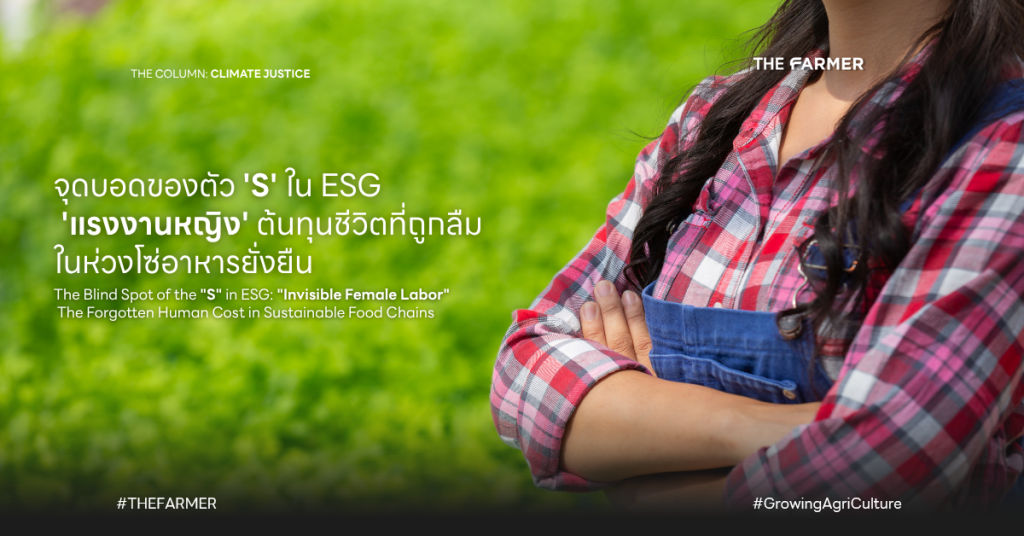
THE COLUMN:จุดบอดของตัว ‘S’ ใน ESG: ‘แรงงานหญิง’ ต้นทุนชีวิตที่ถูกลืมในห่วงโซ่อาหารยั่งยืน
THE COLUMN: The Blind Spot of the “S” in ESG: “Invisible Female Labor” — The Forgotten Human Cost in Sustainable Food Chains
⸻
(English is below)
⸻
“เรามักพูดถึงความยั่งยืนของอาหารผ่านคาร์บอนฟุตพริ้นท์หรือการฟื้นฟูดิน แต่มักมองข้ามความจริงที่ว่า เบื้องหลังผลผลิตเหล่านั้นคือ ‘แรงงานหญิง’ ที่ต้องแบกรับภาระจากวิกฤตสภาพภูมิอากาศ ในขณะที่พวกเธออาจมีอำนาจต่อรองน้อยที่สุดในการปรับเปลี่ยนฟาร์มให้ตรงตามความต้องการที่พวกเธอเรียกร้อง”
เมื่อตัว ‘S’ ในสมการความยั่งยืน พลาดเป้ามิติทางเพศสภาพ ในยุคที่องค์กรธุรกิจเร่งปรับตัวสู่มาตรฐานการจัดซื้ออย่างยั่งยืน (Sustainable Sourcing) ในทางปฏิบัติ การดำเนินงานด้าน ESG ของบางองค์กรอาจให้ความสำคัญกับความเสี่ยงด้านสิ่งแวดล้อม หรือแรงงานในสถานประกอบการที่ตรวจสอบได้ง่ายกว่า จนอาจเกิดจุดบอดในตัว ‘S’ (Social) นั่นคือการมองข้ามโครงสร้างของแรงงานหญิงในภาคการเกษตร
ในบทความนี้ “แรงงานหญิงแฝง” (Invisible Labor) หมายถึง งานผลิต งานดูแล และงานสนับสนุนที่ผู้หญิงทำในภาคเกษตร แต่ไม่ได้รับการมองเห็น หรือไม่ได้รับการชดเชยและอำนาจต่อรองอย่างเหมาะสม ทั้งในฐานะแรงงานในครอบครัวที่ไม่ได้รับค่าจ้างและแรงงานรับจ้างนอกระบบ เมื่อโลกเผชิญกับเหตุการณ์สภาพอากาศสุดขั้ว พวกเธอมักเป็นหนึ่งในกลุ่มที่ได้รับผลกระทบอย่างหนัก ทั้งในฐานะผู้จัดหาอาหาร ผู้ดูแลผู้เจ็บป่วย และผู้หารายได้เสริม หากธุรกิจไม่ตระหนักถึงความเหลื่อมล้ำเชิงโครงสร้างนี้ นโยบายรักษ์โลกก็อาจกลายเป็นการตอกย้ำความไม่เป็นธรรมในห่วงโซ่อุปทานเสียเอง
⸻
ถอดรหัสความเปราะบางและกับดักของแรงงานแฝง
The Invisible Labor Trap (กับดักแรงงานแฝงและการประเมินมูลค่า) ในระบบเกษตรรายย่อย ผู้หญิงอาจมีบทบาทตั้งแต่การเตรียมดิน เพาะปลูก และแปรรูป ไปจนถึงงานดูแลสมาชิกในครัวเรือน อย่างไรก็ตาม งานดูแลและงานครัวเรือนที่ไม่ได้รับค่าจ้างมักไม่ถูกสะท้อนอย่างเต็มที่ในตัวชี้วัดเศรษฐกิจแบบ GDP เมื่อเกิดวิกฤตภัยแล้งหรือน้ำท่วม ผู้หญิงในบางบริบทอาจต้องใช้เวลาและแรงกายมากขึ้นในการทำงาน ต้นทุนทางเวลาที่เพิ่มขึ้นนี้อาจลดเวลาที่พวกเธอมีสำหรับการพัฒนาทักษะหรือการเข้าสู่ระบบแรงงานที่มีค่าจ้างเป็นธรรม
The Decision-Making Paradox (ผู้ลงแรงที่ไม่ได้รับอำนาจตัดสินใจ) ความย้อนแย้งที่สำคัญมักเกิดขึ้นเมื่อองค์กรผู้รับซื้อเรียกร้องให้คู่ค้าทำ “เกษตรฟื้นฟู” หรือเปลี่ยนวิถีการผลิต แม้แรงงานหญิงอาจเป็นผู้ลงมือทำ แต่ในบางบริบท อำนาจตัดสินใจเรื่องการลงทุน สัญญารับซื้อ หรือสิทธิในที่ดินยังไม่กระจายอย่างเท่าเทียมนักกับพวเธอ และอาจผูกอยู่กับสมาชิกครัวเรือนที่มีอำนาจทางกฎหมายหรือการเงินมากกว่า การขาดอำนาจตัดสินใจนี้อาจทำให้พวกเธอมีส่วนร่วมในนำเสนอการลดความเสี่ยงด้านสุขภาพของพวกเธอได้น้อยลง
The Resource & Financial Gap (กำแพงการเข้าถึงทรัพยากรและแหล่งทุน) เมื่อผู้หญิงไม่มีสิทธิในที่ดินหรือหลักประกันในชื่อของตนเอง พวกเธออาจเผชิญอุปสรรคมากขึ้นในการเข้าถึงสินเชื่อ เงินทุนเพื่อการปรับตัว (Adaptation Finance) หรือโครงการเยียวยาภัยพิบัติ ทั้งนี้ขึ้นอยู่กับเงื่อนไขของสถาบันการเงินและนโยบายของแต่ละพื้นที่ ความเหลื่อมล้ำนี้ทำให้ความสามารถในการฟื้นตัว (Resilience) และการเตรียมพร้อมรับมือวิกฤตทำได้ยากขึ้น
⸻
หลักฐานระดับโลกสู่บริบทท้องถิ่น
มุมมองจาก UN Women และ ILO, UN Women อธิบายว่า วิกฤตสภาพภูมิอากาศสามารถเพิ่มภาระงานดูแล งานบ้าน และงานชุมชนที่ไม่ได้รับค่าจ้างของผู้หญิงและเด็กหญิง ในขณะที่รายงานเชิงกรอบขององค์การแรงงานระหว่างประเทศ (ILO) อธิบายว่า ผู้หญิงในภาคเกษตรและเศรษฐกิจนอกระบบอาจมีข้อจำกัดในการเข้าถึงที่ดิน เครดิต เทคโนโลยี และกลไกการตัดสินใจ ข้อค้นพบนี้สะท้อนว่า หากการเปลี่ยนผ่านสู่เศรษฐกิจสีเขียว (Green Transition) ไม่บูรณาการมุมมองด้านเพศสภาพอย่างรอบคอบ ก็อาจทำให้ความเหลื่อมล้ำทางเศรษฐกิจยังคงอยู่และทิ้งแรงงานบางกลุ่มไว้ข้างหลัง
รอยรั่วของนโยบายความยั่งยืน ในบริบทเกษตรกรรมไทย ตัวอย่างของความท้าทายนี้อาจปรากฏให้เห็นเมื่อองค์กรธุรกิจผลักดันห่วงโซ่อุปทานสู่แนวทางที่ยั่งยืนขึ้น เช่น เมื่อบริษัทผู้รับซื้อกำหนดให้ลดหรือยุติการใช้สารกำจัดวัชพืชบางประเภทตามข้อกำหนด สิ่งที่ตามมาในฟาร์มรายย่อยอาจเป็นการกำจัดวัชพืชด้วยมือ การใช้วัสดุคลุมดิน หรือการปรับใช้ปัจจัยชีวภาพในบางระบบ โดยข้อมูลสรุปของ FAO ระบุว่า ผู้หญิงมีบทบาทสำคัญทั้งในงานผลิต งานจัดการทรัพยากร และการดูแลความมั่นคงทางอาหาร จากกรอบดังกล่าว การแบ่งงานในแต่ละพื้นที่อาจทำให้งานที่ใช้เวลาและแรงงานสูงตกเป็นภาระของแรงงานหญิงในครัวเรือนมากกว่าในบางบริบท
ระบบติดตามของผู้รับซื้อจึงควรประเมินเพิ่มเติมว่าใครเป็นผู้แบกรับการทำงานที่เพิ่มขึ้น และผู้ลงแรงเหล่านั้นได้รับส่วนแบ่งผลประโยชน์หรือการสนับสนุนอย่างเหมาะสมหรือไม่ หากมาตรการดังกล่าวทำให้ภาระงานเพิ่มขึ้นโดยไม่มีการประเมินหรือสนับสนุนอย่างเหมาะสม นโยบายรักษ์โลกก็อาจผลักต้นทุนการเปลี่ยนผ่านบางส่วนไปเป็นงานที่ไม่ได้รับค่าจ้างของผู้หญิงอย่างเงียบๆ
⸻
Regenerate: From Farm to Future
อย่างไรก็ตาม การทำให้แรงงานหญิงมองเห็น ไม่ควรหมายถึงการนำเสนอผู้หญิงในฐานะผู้รับภาระเพียงอย่างเดียว เพราะผู้หญิงยังเป็นผู้มีความรู้ ผู้ริเริ่ม และผู้นำการปรับตัวในระบบอาหาร หากได้รับสิทธิ ทรัพยากร และอำนาจต่อรองอย่างเท่าเทียม
ความยุติธรรมทางสภาพภูมิอากาศ (Climate Justice) ไม่สามารถแยกขาดจากความเท่าเทียมทางเพศได้ องค์กรธุรกิจขนาดใหญ่ควรทบทวนนโยบายจัดซื้อโดยผนวกการประเมินความเสี่ยงด้านสิทธิมนุษยชนและแรงงานหญิงอย่างรอบด้าน (Gender-responsive Sourcing) เช่น การออกแบบสัญญาให้ผู้หญิงมีส่วนร่วมในการตัดสินใจ การจ่ายผลประโยชน์เข้าบัญชีของผู้มีสิทธิอย่างโปร่งใส (ซึ่งอาจเป็นบัญชีของผู้หญิง บัญชีร่วม หรือกลุ่มวิสาหกิจที่ผู้หญิงบริหาร) และการจัดให้มีกลไกร้องเรียนที่ปลอดภัย ทั้งนี้ กลไกร้องเรียนควรรักษาความลับ เข้าถึงได้โดยไม่ต้องผ่านผู้มีอำนาจในครัวเรือน และมีมาตรการป้องกันการตอบโต้ผู้ร้องเรียน
การดำเนินงานควรมีตัวชี้วัดแยกตามเพศ เช่น ชั่วโมงงานที่เพิ่มขึ้น การเข้าถึงผลประโยชน์ จำนวนหรือสัดส่วนของผู้หญิงที่เข้าร่วมกระบวนการตัดสินใจ รวมถึงระดับอำนาจหรือสิทธิออกเสียงของพวกเธอ โดยควรติดตามทั้งจำนวนข้อร้องเรียน ระยะเวลาการตอบสนอง ผลลัพธ์หลังการแก้ไข และความปลอดภัยของผู้ร้องเรียน ไม่ใช่พิจารณาจากจำนวนข้อร้องเรียนเพียงอย่างเดียว ทั้งนี้ การเก็บข้อมูลควรคำนึงถึงความเป็นส่วนตัว ความยินยอม และความปลอดภัยของผู้ให้ข้อมูล โดยเฉพาะข้อมูลด้านรายได้และข้อร้องเรียน โดยควรออกแบบการเก็บข้อมูลให้เหมาะสมกับขนาดของฟาร์มและไม่เพิ่มภาระการรายงานเกินจำเป็น
สำหรับผู้บริโภคทั่วไป การตระหนักถึงประเด็นนี้ช่วยให้เรามองเห็น “ต้นทุนชีวิตที่ซ่อนอยู่” ในอาหารแต่ละมื้อ ท้ายที่สุดแล้ว ในมุมธุรกิจ การให้อำนาจและคุ้มครองแรงงานหญิงไม่ใช่แค่เรื่องของภาพลักษณ์ แต่เป็นส่วนหนึ่งของการสร้างความยืดหยุ่นให้ห่วงโซ่อุปทานและการวางแผนความต่อเนื่องทางธุรกิจ (Business Continuity Planning: BCP) เพราะการสร้างขีดความสามารถและความปลอดภัยให้แรงงานหญิง รวมถึงการกระจายอำนาจและทรัพยากรอย่างเป็นธรรม สามารถช่วยให้ครัวเรือนและห่วงโซ่อาหารรับมือกับวิกฤตได้ดีขึ้น
⸻
ร่วมแสดงความคิดเห็นและอย่าลืมติดตามบทความ THE COLUMN ได้ทุกวันที่หน้า WEBSITE และ FACEBOOK ของ THE FARMER
⸻
“We often discuss food sustainability through carbon footprints or soil restoration, but frequently overlook the truth that behind those yields is ‘female labor’ bearing the brunt of the climate crisis, while they might possess the least bargaining power to adapt farms to meet the needs they demand.”
When the “S” in the Sustainability Equation Misses the Gender Dimension. In an era where corporate entities are rapidly adapting to Sustainable Sourcing standards, in practice, the ESG operations of some organizations might prioritize environmental risks or easily auditable facility-based labor. This can create a blind spot in the “S” (Social) pillar: overlooking the structural reality of female labor in the agricultural sector.
In this article, “Invisible Labor” refers to the production, caregiving, and support work women perform in agriculture that remains unseen, inadequately compensated, and without appropriate bargaining power—whether as unpaid family labor or informal wage workers. When the world faces extreme weather events, they are often among the hardest hit, acting as food providers, caregivers for the sick, and supplemental income earners. If businesses fail to recognize this structural inequality, eco-friendly policies could reinforce injustice within the supply chain itself.
⸻
Decoding the Vulnerabilities and Traps of Invisible Labor
The Invisible Labor Trap (Valuation and the Invisible Labor Trap): In smallholder agricultural systems, women may play roles ranging from land preparation, cultivation, and processing to caring for household members. However, unpaid care and domestic work are rarely fully reflected in economic indicators like GDP. During crises such as droughts or floods, women in certain contexts may have to expend significantly more time and physical effort to work. This increased time cost can reduce the time they have available for skill development or entering a fairly compensated labor system.
The Decision-Making Paradox (The Laborers Without Decision-Making Power): A critical paradox often arises when buying organizations demand that their partners practice “Regenerative Agriculture” or alter production methods. Although female laborers might be the ones executing the work, in some contexts, decision-making power regarding investments, purchasing contracts, or land rights is not equitably distributed to them. Instead, it may be tied to household members possessing greater legal or financial authority. This lack of decision-making power can result in them having less participation in proposing measures to mitigate their own health risks.
The Resource & Financial Gap (The Barrier to Accessing Resources and Capital): When women lack land rights or collateral in their own names, they may face steeper obstacles in accessing credit, Adaptation Finance, or disaster relief programs—depending on the conditions of financial institutions and regional policies. This disparity makes Resilience and crisis preparedness significantly more difficult to achieve.
⸻
From Global Evidence to Local Contexts
Perspectives from UN Women and the ILO: UN Women explains that the climate crisis can exacerbate the unpaid care, domestic, and community workloads of women and girls. Meanwhile, framework reports from the International Labour Organization (ILO) delineate that women in agriculture and the informal economy may face limitations in accessing land, credit, technology, and decision-making mechanisms. These findings reflect that if the Green Transition does not meticulously integrate a gender perspective, economic inequalities may persist, leaving certain labor groups behind.
The Leaks in Sustainability Policies: In the Thai agricultural context, an example of this challenge may manifest when corporate entities push the supply chain toward more sustainable practices. For instance, when purchasing companies mandate the reduction or cessation of specific herbicides in accordance with regulations, the subsequent reality on smallholder farms might be manual weeding, utilizing mulching materials, or adapting biological factors in certain systems. Summary data from the FAO indicates that women play vital roles in production, resource management, and food security provision. Within this framework, the division of labor in various regions could cause highly time-consuming and labor-intensive tasks to disproportionately burden female household laborers in certain contexts.
Therefore, buyers’ monitoring systems should additionally assess who exactly is shouldering the increased workload, and whether those exerting the effort are receiving an appropriate share of benefits or support. If such measures increase workloads without proper evaluation or support, eco-friendly policies might silently push portions of the transition costs into the unpaid labor of women.
⸻
Regenerate: From Farm to Future
However, making female labor visible should not mean solely portraying women as burden-bearers. Women are also knowledge holders, innovators, and leaders in food system adaptation, provided they receive equitable rights, resources, and bargaining power.
Climate Justice cannot be decoupled from gender equality. Large corporate entities should review their procurement policies by comprehensively integrating human rights and female labor risk assessments (Gender-responsive Sourcing). Examples include designing contracts that ensure women participate in decision-making, transparently disbursing benefits into the accounts of the rightful recipients (which could be a woman’s account, a joint account, or an enterprise group managed by women), and establishing safe grievance mechanisms. These grievance mechanisms should maintain confidentiality, be accessible without needing to bypass household authority figures, and feature anti-retaliation measures for complainants.
Operations should feature sex-disaggregated metrics, such as increased working hours, access to benefits, the number or proportion of women participating in decision-making processes, as well as their level of authority or voting rights. Tracking should encompass the volume of grievances, response times, post-resolution outcomes, and complainant safety, rather than merely evaluating based solely on the number of complaints. Furthermore, data collection must prioritize the privacy, consent, and safety of informants—especially concerning income data and grievances. Data collection designs should be proportionate to farm sizes and avoid imposing unnecessary reporting burdens.
For general consumers, recognizing this issue helps us perceive the “hidden human costs” in every meal. Ultimately, from a business perspective, empowering and protecting female labor is not merely an image-building exercise; it is an integral part of building supply chain resilience and Business Continuity Planning (BCP). Building capacity and ensuring safety for female workers, alongside the equitable distribution of power and resources, can significantly help households and food supply chains better withstand crises.
⸻
Share your thoughts, and don’t forget to follow THE COLUMN articles every day on the WEBSITE and FACEBOOK page of THE FARMER.
⸻
𝗧𝗛𝗘 𝗙𝗔𝗥𝗠𝗘𝗥: 𝗴𝗿𝗼𝘄𝗶𝗻𝗴 ◦ 𝗮𝗴𝗿𝗶 ◦ 𝗰𝘂𝗹𝘁𝘂𝗿𝗲 | 𝘙𝘦𝘨𝘦𝘯𝘦𝘳𝘢𝘵𝘪𝘷𝘦 𝘙𝘪𝘴𝘦
Facebook: https://www.facebook.com/thefarmer.th
YouTube: https://www.youtube.com/@thefarmerth
Instagram: https://www.instagram.com/thefarmerthai/

