

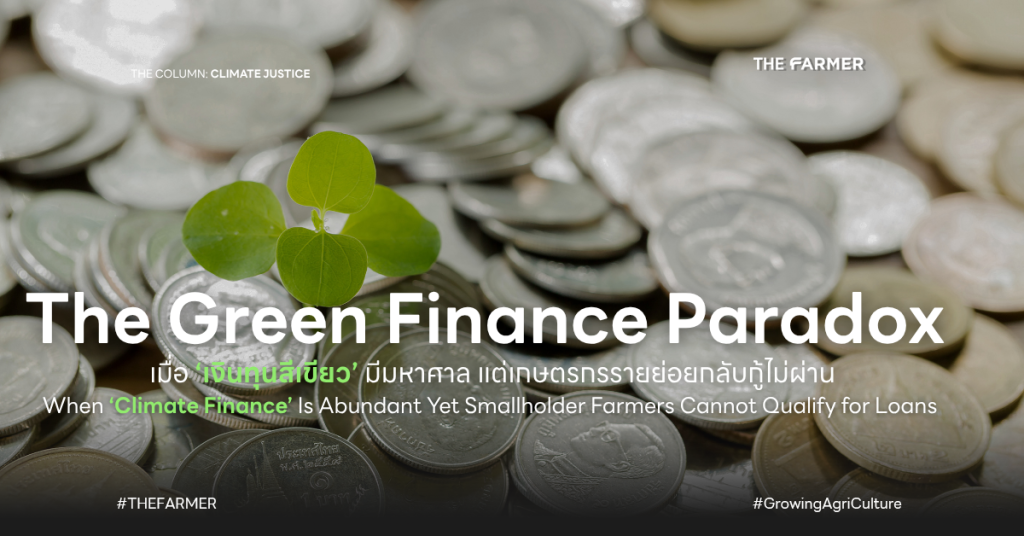
THE COLUMN: The Green Finance Paradox เมื่อ ‘เงินทุนสีเขียว มีมหาศาล แต่เกษตรกรรายย่อยกลับกู้ไม่ผ่าน
THE COLUMN: The Green Finance Paradox — When ‘Climate Finance’ Is Abundant, Yet Smallholder Farmers Cannot Qualify for Loans
⸻
(English is below)
⸻
“ในวันที่โลกกำลังระดมเม็ดเงินมหาศาลเข้าสู่กองทุนภูมิอากาศและสินเชื่อสีเขียวเพื่อสร้างระบบอาหารที่ยั่งยืน ความย้อนแย้งที่เจ็บปวดที่สุดคือผู้ผลิตอาหารรายย่อยซึ่งยืนอยู่ด่านหน้าของวิกฤตโลกร้อน กลับได้รับส่วนแบ่งจากเม็ดเงินเหล่านี้น้อยที่สุด คำถามสำคัญจึงไม่ใช่การกล่าวโทษว่าสถาบันการเงินใจร้าย แต่คือเราต้องปลดล็อกเงื่อนไขและออกแบบกลไกการเงินอย่างไร เพื่อให้เม็ดเงินสีเขียวเหล่านี้ส่งถึงมือเกษตรกรได้จริง”
เมื่อเม็ดเงินเปลี่ยนผ่านกองอยู่ข้างบน แต่คนข้างล่างขาดทุนปรับตัว
กระแสการเงินเพื่อความยั่งยืนและสินเชื่อสีเขียว (Green Finance) กำลังเป็นเครื่องมือสำคัญในการขับเคลื่อนเศรษฐกิจยุคโลกเดือด ทั้งการปล่อยกู้ดอกเบี้ยต่ำและการตั้งกองทุนสนับสนุนให้ภาคธุรกิจลดคาร์บอน ทว่าในภาคการเกษตร เม็ดเงินเหล่านี้ส่วนใหญ่มักไหลไปรวมกันอยู่ที่โครงการขนาดใหญ่หรือบริษัทที่มีความพร้อมด้านเอกสารและหลักทรัพย์ค้ำประกัน ขณะที่เกษตรกรรายย่อยซึ่งต้องการเงินทุนไปขุดบ่อเก็บน้ำ ปรับปรุงดิน หรือเปลี่ยนระบบเพาะปลูกให้รอดพ้นจากสภาพอากาศแปรปรวน กลับชนเข้ากับกำแพงเกณฑ์การขอทุนที่ซับซ้อนเกินเอื้อม
เพื่อให้เห็นภาพว่าเงินทุนเหล่านี้ติดค้างอยู่ที่จุดไหนและจะปลดล็อกได้อย่างไร เรามองผ่านสามแนวคิดหลักของระบบการเงินภูมิอากาศ คือ ช่องว่างการเข้าถึงทุนสีเขียว (Climate Finance Gap) ซึ่งสะท้อนความจริงที่ว่ามีเม็ดเงินระดับโลกเพียงส่วนน้อยนิดที่ไหลลงไปถึงระดับไร่นา ตามมาด้วย ต้นทุนการตรวจรับรองความยั่งยืน (Transaction & Verification Costs) หรือค่าใช้จ่ายในการวัดผลคาร์บอนและทำรายงานสิ่งแวดล้อมเพื่อยื่นขอทุน และกุญแจสำคัญในการแก้ปัญหานี้อย่าง การเงินแบบผสมผสานเพื่อลดความเสี่ยง (Blended Finance) ซึ่งหมายถึงการดึงเงินอุดหนุนจากภาครัฐ กองทุนสากล หรือบริษัทรับซื้อปลายน้ำ เข้ามาช่วยค้ำประกันความเสี่ยงแทนเกษตรกรบางส่วน เพื่อให้ธนาคารกล้าอนุมัติเงินกู้ให้รายย่อยได้จริง
ปัญหาที่ทำให้เงินทุนสีเขียวไปไม่ถึงแปลงเกษตร ไม่ได้เกิดจากความเพิกเฉยของฝ่ายใดฝ่ายหนึ่ง แต่เกิดจากการที่กติกาการเงินสีเขียว มักถูกเขียนขึ้นโดยอิงตามศักยภาพของบริษัทขนาดใหญ่ ส่งผลให้เกณฑ์การพิสูจน์ผลลัพธ์ด้านสิ่งแวดล้อม ที่เข้มงวด กลายเป็นกำแพงที่ผลักผู้ผลิตรายย่อย ออกจากระบบสินเชื่อไปโดยปริยาย

⸻
ทำไมเงินกู้สีเขียวถึงไปไม่ถึงมือเกษตรกร และติดอยู่ที่ตรงไหน?
1. The Risk-Rating Exclusion (เมื่อความแปรปรวนของอากาศทำให้เกษตรกรถูกตีตราว่า ‘เสี่ยงเกินกว่าจะให้กู้’)
ในระบบธนาคารทั่วไป การอนุมัติสินเชื่อต้องดูจากรายได้ที่แน่นอนและโฉนดที่ดินค้ำประกันเพื่อรักษาเสถียรภาพทางการเงิน ไม่ใช่การตั้งใจกีดกันรายย่อย แต่เมื่อภาวะโลกร้อนทำให้ภัยแล้งและน้ำท่วมคาดเดาไม่ได้ อาชีพเกษตรกรรมจึงถูกระบบประเมินความเสี่ยงจัดอยู่ในกลุ่มที่รายได้ผันผวนสูงทันที ซ้ำร้าย การปรับเปลี่ยนสวนไปทำเกษตรยั่งยืนต้องใช้เวลารอให้ดินและต้นไม้ฟื้นตัวหลายปีกว่าจะคืนทุน เมื่อรายได้ช่วงแรกยังไม่นิ่งและเกษตรกรหลายรายทำกินบนที่ดินเช่าหรือที่ดินที่ไม่มีโฉนดสมบูรณ์ คนที่ต้องการเงินทุนไปปรับตัวรับมือโลกร้อนมากที่สุด จึงตกเกณฑ์การพิจารณาของธนาคารตั้งแต่ด่านแรก
2. The Transaction Cost Barrier (ค่าพิสูจน์ว่า ‘รักษ์โลกจริง’ ที่แพงและซับซ้อนเกินวงเงินกู้)
เงินกู้ดอกเบี้ยต่ำเพื่อสิ่งแวดล้อมมักมีเงื่อนไขว่าผู้กู้ต้องส่งรายงานพิสูจน์ว่าช่วยลดคาร์บอนหรือดูแลธรรมชาติได้ตามเกณฑ์สากล สำหรับบริษัทใหญ่ที่กู้เงินหลายร้อยล้านบาท การจ้างผู้เชี่ยวชาญมาทำรายงานตรวจรับรองถือเป็นเรื่องเล็กน้อย แต่สำหรับชาวสวนที่ต้องการกู้เงินเพียงหลักหมื่นหรือหลักแสนบาทเพื่อทำระบบน้ำ ต้นทุนในการลงพื้นที่ตรวจวัดแปลงย่อยๆ กลับสูงเกินกว่าดอกเบี้ยที่ธนาคารจะได้รับ ส่วนฝั่งเกษตรกรเอง หากต้องควักเงินจ่ายค่าธรรมเนียมตรวจรับรองก่อนกู้ ก็จะเกิดทั้ง ต้นทุนทางเศรษฐกิจ จากค่าประเมินและค่าเอกสารที่อาจไม่คุ้มกับวงเงินที่จะได้รับ และเกิด ค่าเสียโอกาส ที่ต้องทิ้งงานในสวนมาเดินเรื่องเอกสารที่ซับซ้อนเกินความเข้าใจ
3. The Informal Credit Trap (วงจรหนี้นอกระบบ เมื่อเงินทุนปรับตัวมาไม่ทันฤดูเพาะปลูก)
เมื่อคลื่นความร้อนและภัยแล้งโจมตีสวนจนเสียหาย ชาวสวนไม่สามารถรอขั้นตอนการขอทุนสีเขียวที่ใช้เวลานานหลายเดือนได้ การต้องเร่งหาเงินมาซื้อพันธุ์พืชใหม่หรือหาน้ำมารดต้นไม้ให้รอดตายในทันที บีบให้เกษตรกรบางส่วนต้องหันไปพึ่งเงินกู้นอกระบบหรือการซื้อปุ๋ยซื้อยาด้วยระบบเงินเชื่อที่มีดอกเบี้ยแฝงสูงลิ่ว ความย้อนแย้งจึงเกิดขึ้นเมื่อความพยายามปรับตัวสู้โลกร้อน กลับกลายเป็นชนวนที่ทำให้หนี้สินครัวเรือนพุ่งสูงขึ้น จนเกษตรกรต้องเร่งปลูกพืชระยะสั้นแบบเดิมเพื่อหาเงินมาหมุนจ่ายดอกเบี้ยรายวัน แทนที่จะได้เปลี่ยนผ่านสู่เกษตรยั่งยืน

⸻
ส่องตัวเลขโลกย้อนดูความจริงในไร่นาไทย
ความเหลื่อมล้ำในการกระจายเม็ดเงินสีเขียวปรากฏชัดในข้อมูลระดับสากล โดยข้อมูลสรุปของ กองทุนระหว่างประเทศเพื่อพัฒนาเกษตรกรรมแห่งสหประชาชาติ (IFAD) และรายงานวิเคราะห์ของ Climate Policy Initiative (CPI) ในกรอบการติดตามเม็ดเงินการเงินเพื่อสภาพภูมิอากาศโลก ระบุตรงกันว่า แม้เกษตรกรรายย่อยจะเป็นกำลังหลักในการผลิตอาหารเลี้ยงประชากรโลก แต่เม็ดเงินเพื่อสภาพภูมิอากาศที่ส่งถึงมือเกษตรกรรายย่อยโดยตรงกลับมีสัดส่วนไม่ถึงร้อยละสองของเม็ดเงินทั้งหมดในระบบโลก สอดคล้องกับกรอบข้อมูลของ องค์การอาหารและการเกษตรแห่งสหประชาชาติ (FAO) ที่ชี้ว่าระบบเกษตรได้รับงบลงทุนรับมือโลกร้อนน้อยกว่าภาคพลังงานและขนส่งอย่างมาก จากกรอบดังกล่าว จึงสะท้อนว่าหากไม่เปลี่ยนวิธีส่งต่อเงินทุน เม็ดเงินมหาศาลที่มีอยู่ก็จะไม่สามารถสร้างความมั่นคงทางอาหารที่ต้นน้ำได้จริง
สำหรับบริบทที่อาจพบในประเทศไทย นโยบายการเงินสีเขียวกำลังเริ่มวางรากฐานอย่างเป็นระบบ โดยแนวทางของ ธนาคารแห่งประเทศไทย (ธปท.) ได้จัดทำมาตรฐานการจัดกลุ่มกิจกรรมทางเศรษฐกิจที่คำนึงถึงสิ่งแวดล้อม (Thailand Taxonomy) เพื่อสนับสนุนสินเชื่อเพื่อการเปลี่ยนผ่าน ควบคู่กับการทำงานของสถาบันการเงินเฉพาะกิจของรัฐอย่าง ธนาคารเพื่อการเกษตรและสหกรณ์การเกษตร (ธ.ก.ส.) ที่มีสินเชื่อสีเขียวและโครงการธนาคารต้นไม้สำหรับชุมชน อย่างไรก็ตาม เมื่อมองลึกลงไปในสภาพความเป็นจริงของภาคเกษตรไทยที่ยังมีภาระหนี้ครัวเรือนสูงและเกษตรกรจำนวนมากทำกินบนที่ดิน ส.ป.ก. หรือที่ดินเช่า จึงพบว่าเกษตรกรรายย่อยบางส่วนยังเข้าไม่ถึงสินเชื่อสีเขียวของธนาคารพาณิชย์เพราะติดเงื่อนไขหลักประกันและขาดเครื่องมือเก็บข้อมูลสิ่งแวดล้อม ทั้งนี้ โอกาสที่เกษตรกรจะได้รับเงินทุนจริงย่อมขึ้นอยู่กับหลายปัจจัย เช่น ชนิดพืชที่ปลูก ประวัติการชำระหนี้ รูปแบบเอกสารสิทธิ์ที่ดิน การรวมกลุ่มเป็นสหกรณ์หรือวิสาหกิจชุมชน ตลอดจนการมีสัญญารับซื้อผลผลิตจากคู่ค้า โดยรูปแบบและขนาดของปัญหาการเข้าถึงทุนควรตรวจสอบด้วยข้อมูลภาคสนามและข้อมูลสินเชื่อรายย่อยของไทยเพิ่มเติม
การทำให้เกษตรกรได้รับเงินทุนไปปรับตัวได้จริง มีแนวทางปฏิบัติที่ได้รับการพิสูจน์และเสนอแนะไว้ในระดับสากล โดยสามารถถอดบทเรียนจากกรอบขององค์กรการเงินเพื่อการพัฒนาออกมาเป็น 3 กลไกสำคัญ
การใช้เงินค้ำประกันความเสี่ยงชุดแรกและการใช้สัญญารับซื้อแทนโฉนด โดยแนวทางด้าน การเงินแบบผสมผสานของ IFAD (Blended Finance) และข้อเสนอแนะในรายงานของ Climate Policy Initiative (CPI) ชี้ให้เห็นว่า การจะทำให้ธนาคารพาณิชย์กล้าปล่อยกู้ให้รายย่อย ต้องใช้เงินทุนจากภาครัฐ กองทุนสากล หรือบริษัทรับซื้อปลายน้ำ เข้ามาตั้งเป็น “เงินค้ำประกันความเสี่ยงชุดแรก (First-loss Guarantee)” เพื่อรับความเสียหายแทนบางส่วนหากเกิดภัยพิบัติ พร้อมทั้งปรับโครงสร้างเงินกู้ให้มีระยะปลอดหนี้ช่วงต้น (Grace Period) ที่สอดคล้องกับเวลาที่เกษตรกรใช้ฟื้นฟูดินและรอผลผลิต ควบคู่ไปกับการใช้กลไกการเงินในห่วงโซ่อุปทานตามกรอบของ บรรษัทเงินทุนระหว่างประเทศ (IFC) ที่เปิดให้ใช้ “สัญญารับซื้อผลผลิตระยะยาว” จากบริษัทคู่ค้ามาเป็นหลักประกันรายได้แทนการพึ่งพาโฉนดที่ดินเพียงอย่างเดียว
การรวมกลุ่มผ่านตัวกลางและการอุดหนุนค่าตรวจรับรอง เพื่อแก้ปัญหาต้นทุนการตรวจประเมินที่แพงเกินวงเงินกู้ กรอบแนวทางของ FAO ด้านการเงินเพื่อสภาพภูมิอากาศ และ CPI เสนอให้ใช้สหกรณ์การเกษตรหรือวิสาหกิจชุมชนทำหน้าที่เป็น “ตัวกลางรวบรวมรายย่อย (Aggregation)” เพื่อยื่นขอสินเชื่อสีเขียวก้อนใหญ่และใช้เทคโนโลยีตรวจประเมินผลระดับกลุ่มแทนการตรวจทีละแปลง โดยมีเงื่อนไขสำคัญคือ กองทุนสีเขียวหรือบริษัทผู้รับซื้อปลายน้ำควรเป็นผู้สนับสนุนงบประมาณช่วยเหลือทางเทคนิคและค่าตรวจรับรองมาตรฐาน (Technical Assistance & Certification Support) แทนชาวสวน จากกรอบดังกล่าว เมื่อนำมาประยุกต์ใช้ในทางปฏิบัติ การจัดทำสัญญารับเงินและชำระหนี้จึงควรเปิดทางเลือกที่ยืดหยุ่นให้เกษตรกร ทั้งผ่านบัญชีผู้มีสิทธิ บัญชีร่วม หรือบัญชีกลุ่มวิสาหกิจ พร้อมทั้งออกแบบระบบเก็บข้อมูลให้เรียบง่ายและเคารพความเป็นส่วนตัวของข้อมูลเกษตรกร (Data Privacy)
ประการสุดท้าย การตั้งตัวชี้วัดและกลไกคุ้มครองความเป็นธรรมตามมาตรฐานสากล เพื่อให้มั่นใจว่าเม็ดเงินไม่ตกหล่นกลางทาง การกำกับดูแลสามารถอ้างอิงตามกรอบ แนวทางของ OECD-FAO สำหรับห่วงโซ่อุปทานเกษตรที่มีความรับผิดชอบ โดยสถาบันการเงินและองค์กรธุรกิจควรตั้งตัวชี้วัด (Governance KPIs) จากสัดส่วนเม็ดเงินที่ส่งถึงมือรายย่อยจริงและภาระดอกเบี้ยของครัวเรือนที่ลดลง ควบคู่กับการจัดตั้งกลไกร้องเรียนระดับพื้นที่ด้านเงื่อนไขสัญญาและการจัดสรรทุน ที่เกษตรกรเข้าถึงได้โดยไม่ผ่านผู้มีอำนาจ รักษาความลับ ป้องกันการตอบโต้ (Non-retaliation) และวัดผลจากทั้งจำนวนข้อร้องเรียน ระยะเวลาตอบสนอง และการแก้ไขปัญหาได้จริง ส่วนผู้บริโภคและนักลงทุนรายย่อยสามารถร่วมผลักดันได้ด้วยการเลือกลงทุนในกองทุนสีเขียวหรือสนับสนุนแบรนด์ที่เปิดเผยสัดส่วนการกระจายทุนสู่เกษตรกรต้นน้ำอย่างโปร่งใส
⸻
Regenerate: From Farm to Future
ท้ายที่สุด การออกแบบระบบให้เกษตรกรได้รับเงินทุนไปปรับตัวรับมือโลกร้อนได้จริง ไม่ใช่แค่เรื่องของการทำบุญหรือการเคารพหลักการด้านสิทธิมนุษยชนและการพัฒนาที่ยั่งยืนตามบริบทของมาตรฐานที่เกี่ยวข้องเท่านั้น แต่ยังเป็นส่วนหนึ่งของการสร้างความยืดหยุ่นให้ห่วงโซ่อุปทานและการวางแผนความต่อเนื่องทางธุรกิจ (Business Continuity Planning: BCP) ของทั้งธุรกิจอาหารและธนาคารเอง เพราะในวันที่อากาศโลกแปรปรวนรุนแรงขึ้น หากชาวสวนต้นน้ำขาดเงินทุนในการปกป้องแปลงปลูกจนผลผลิตล่มสลาย ความเสียหายนั้นย่อมย้อนกลับมาเป็นวิกฤตขาดแคลนวัตถุดิบของภาคธุรกิจ และกลายเป็นหนี้เสียในระบบธนาคารอย่างไม่อาจหลีกเลี่ยงได้
⸻
อย่าลืมติดตามบทความ THE COLUMN ได้ที่หน้า WEBSITE และ FACEBOOK ของ THE FARMER
⸻
“At a time when the world is mobilizing massive capital into climate funds and green loans to build sustainable food systems, the most painful irony is that smallholder food producers standing on the frontlines of the climate crisis receive the smallest fraction of this funding. The critical question is not about blaming financial institutions as heartless, but asking how we can unlock conditions and design financial mechanisms so that green capital actually reaches the hands of farmers.”
When Transition Capital Pools at the Top, While Those on the Ground Lack Adaptation Funds
Sustainable finance and green loans (Green Finance) have become vital engines driving the economy in an era of global boiling—ranging from low-interest loans to funds supporting corporate carbon reduction. In the agricultural sector, however, the vast majority of this capital flows toward large-scale projects or corporations equipped with robust documentation and collateral. Meanwhile, smallholder farmers—who urgently need capital to dig water reservoirs, restore soil health, or transition their farming systems to survive erratic weather—run straight into a wall of complex, out-of-reach funding criteria.
To understand where this capital gets bottlenecked and how to unlock it, we can examine three core concepts of the climate finance system. First is the Climate Finance Gap, reflecting the reality that only a tiny fraction of global funds trickles down to the farm level. Second is Transaction and Verification Costs, the expenses involved in measuring carbon and compiling environmental reports required to apply for funding. And third is the key to solving this impasse: Blended Finance, which involves mobilizing grants or concessional capital from governments, international funds, or downstream corporate buyers to partially guarantee risks on behalf of farmers—giving commercial banks the confidence to actually approve loans for smallholders.
The reason green capital fails to reach farm plots does not stem from negligence by any single party. Rather, it happens because green finance rules are typically written around the capacities of large corporations, turning strict environmental verification criteria into a barrier that inadvertently pushes smallholder producers out of the formal credit system.
⸻
Why Green Loans Fail to Reach Farmers — And Where Are the Bottlenecks?
1. The Risk-Rating Exclusion (When Weather Volatility Labels Farmers ‘Too Risky to Lend To’)
In conventional banking, loan approvals rely on predictable income and land title deeds as collateral to maintain financial stability—not out of an intent to exclude smallholders. Yet as global warming makes droughts and floods increasingly unpredictable, smallholder farming is immediately classified by risk-assessment models as a high-volatility sector. Worse still, transitioning an orchard toward sustainable agriculture takes several years for soil and trees to recover before yielding returns. When early cash flows remain unstable, and many farmers cultivate rented land or plots without full title deeds, those who need climate adaptation funds the most are screened out by banking criteria at the very first hurdle.
2. The Transaction Cost Barrier (When Proving ‘Genuine Green Impact’ Costs More Than the Loan Itself)
Low-interest environmental loans typically require borrowers to submit reports proving carbon reduction or ecological stewardship aligned with international standards. For a major corporation borrowing hundreds of millions of baht, hiring consultants for verification reports is a minor expense. But for an orchardist seeking a loan of tens or hundreds of thousands of baht to install a water system, the cost of inspecting thousands of small, scattered plots far exceeds the interest revenue banks would earn. For farmers themselves, paying upfront verification fees creates both economic costs—through assessment and documentation expenses that may outweigh the loan amount—and opportunity costs, as they must leave their fieldwork to navigate overwhelmingly complex paperwork.
3. The Informal Credit Trap (When Adaptation Funding Arrives Too Late for the Planting Season)
When heatwaves and droughts devastate an orchard, farmers cannot wait months for green loan approvals. The urgent need to buy new seedlings or secure water to keep trees alive immediately forces some farmers to turn to informal lenders or buy fertilizers and agrochemicals on credit with steep hidden interest rates. A painful paradox emerges: the effort to adapt to global warming becomes the very trigger that causes household debt to spiral, forcing farmers to rush back into short-term monocropping just to service daily interest payments instead of transitioning toward sustainable agriculture.
⸻
Global Figures Mirrored in Thai Farmland Realities
Inequality in distributing green capital is starkly evident in global data. Summary findings from the International Fund for Agricultural Development (IFAD) and analytical reports by the Climate Policy Initiative (CPI) under the global climate finance tracking framework consistently indicate that although smallholder farmers are the backbone of global food production, climate finance flowing directly to smallholders accounts for less than two percent of total global climate finance. This aligns with climate framework data from the Food and Agriculture Organization of the United Nations (FAO), which highlights that agrifood systems receive significantly less climate investment than the energy and transport sectors. From this global framework, it is clear that without changing how capital is channeled, the vast funds available will never build true food security at the upstream level.
In contexts that may be observed in Thailand, green finance policies are systematically laying a strong foundation. Guidelines from the Bank of Thailand (BOT) have established the Thailand Taxonomy to support transition finance, alongside initiatives by specialized state financial institutions like the Bank for Agriculture and Agricultural Cooperatives (BAAC), which offers green credit lines and community tree bank programs. However, looking deeper into the realities of Thai agriculture—where farm household debt remains high, and many farmers cultivate Sor Por Kor (land reform) plots or rented land—some smallholders still cannot access commercial green loans due to collateral requirements and a lack of farm-level environmental data tools. Ultimately, a farmer’s actual access to capital depends on multiple confounding factors, including crop type, credit history, land tenure status, membership in cooperatives or community enterprises, and forward purchasing contracts with buyers—meaning the exact scale and patterns of financial access challenges should be verified through further field data and retail credit records in Thailand.
⸻
Unlocking the Impasse: How Can Green Capital Actually Reach Farmers?
Ensuring that farmers receive capital to adapt in practice relies on proven international frameworks. Lessons from development finance institutions can be distilled into three key mechanisms:
Deploying First-Loss Guarantees and Using Purchasing Contracts as Collateral. Blended finance frameworks from IFAD and policy recommendations from the Climate Policy Initiative (CPI) demonstrate that encouraging commercial banks to lend to smallholders requires capital from governments, international funds, or downstream corporate buyers to establish a “First-loss Guarantee”—absorbing initial losses if climate disasters strike. Loan structures must also incorporate grace periods aligned with the time farmers need to restore soil and await harvests, paired with supply-chain finance mechanisms under the framework of the International Finance Corporation (IFC), which allow long-term purchasing contracts from corporate buyers to serve as income collateral instead of relying solely on land title deeds.
Aggregating Through Intermediaries and Subsidizing Verification Costs. To solve verification costs that exceed loan values, frameworks from the FAO and the World Bank propose using agricultural cooperatives or community enterprises as “Aggregators” to apply for larger green loans and deploy group-level monitoring technologies rather than inspecting individual plots one by one. Crucially, green funds or downstream corporate buyers should subsidize technical assistance and certification support on behalf of farmers. Applying this framework in practice means loan disbursement and repayment contracts should offer flexible options for farmers—whether through eligible individual accounts, joint accounts, or community enterprise accounts—while designing simple data collection systems that strictly respect farmer Data Privacy.
Establishing Governance KPIs and Local Safeguards Under International Standards. To ensure capital does not get lost along the way, governance can draw upon the OECD-FAO Guidance for Responsible Agricultural Supply Chains. Financial institutions and corporations should set Governance KPIs based on the actual proportion of funds reaching smallholders and reductions in household interest burdens. This must be paired with local grievance mechanisms covering contract terms and fund allocation that farmers can access directly without going through authority figures, maintaining strict confidentiality, enforcing non-retaliation, and measuring success by complaint volume, response time, and actual resolution outcomes. Consumers and retail investors, meanwhile, can help drive change by investing in green funds or supporting brands that transparently disclose how capital is distributed to upstream farmers.
⸻
Regenerate: From Farm to Future
Ultimately, designing systems that enable farmers to actually receive climate adaptation funding is not merely an act of charity or adherence to human rights and sustainable development principles within the context of relevant standards. It is also an integral part of building supply chain resilience and Business Continuity Planning (BCP) for both food businesses and banks themselves. As global weather grows increasingly volatile, if upstream orchardists and farmers lack the capital to protect their fields and harvests collapse, that damage will inevitably boomerang back as raw material shortages for corporations and non-performing loans (NPLs) within the banking system.
Don’t forget to follow THE COLUMN on THE FARMER’s WEBSITE and FACEBOOK.
⸻
𝗧𝗛𝗘 𝗙𝗔𝗥𝗠𝗘𝗥: 𝗴𝗿𝗼𝘄𝗶𝗻𝗴 ◦ 𝗮𝗴𝗿𝗶 ◦ 𝗰𝘂𝗹𝘁𝘂𝗿𝗲 | 𝘙𝘦𝘨𝘦𝘯𝘦𝘳𝘢𝘵𝘪𝘷𝘦 𝘙𝘪𝘴𝘦
Facebook: https://www.facebook.com/thefarmer.th
YouTube: https://www.youtube.com/@thefarmerth
Instagram: https://www.instagram.com/thefarmerthai/

