

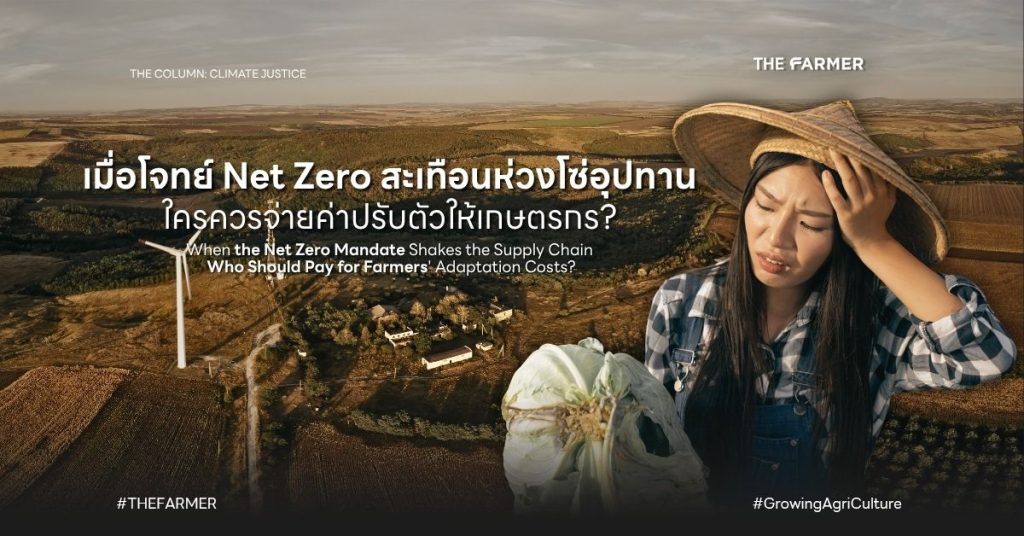
THE COLUMN: เมื่อโจทย์ Net Zero สะเทือนห่วงโซ่อุปทาน: ใครควรจ่ายค่าปรับตัวให้เกษตรกร?
THE COLUMN: When the Net Zero Mandate Shakes the Supply Chain: Who Should Pay for Farmers’ Adaptation Costs?
⸻
(English is below)
⸻
“หากเราคาดหวังให้ห่วงโซ่อาหารมีความยั่งยืน แต่ต้นทุนการปรับตัวกลับตกไปอยู่กับกลุ่มคนที่เปราะบางที่สุด ความมั่นคงทางอาหารในอนาคตอาจเป็นสิ่งที่เราต้องจ่ายในราคาที่แพงขึ้น”
⸻
The Shift: จากกติกาโลกบนบอร์ดบริหาร สู่บิลค่าอาหารบนโต๊ะของคุณ
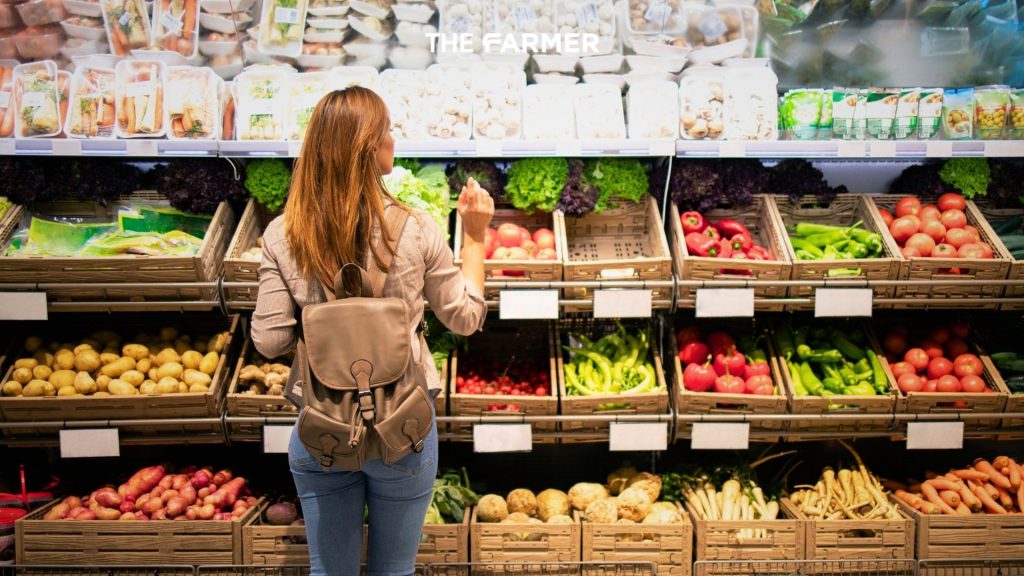
เวลาเดินเข้าซูเปอร์มาร์เก็ตแล้วพบว่าป้ายราคาผักสดหรือเนื้อสัตว์ขยับสูงขึ้น หลายคนอาจคิดว่าเป็นเพียงผลกระทบจากภัยแล้งหรือน้ำท่วมตามฤดูกาล แต่ในโลกธุรกิจเบื้องหลัง มี “ต้นทุนแฝง” ก้อนใหม่ที่กำลังถูกส่งผ่านห่วงโซ่อาหารมาสู่กระเป๋าสตางค์ของเราโดยที่เราอาจไม่รู้ตัว
ปัจจุบัน ธุรกิจขนาดใหญ่ทั่วโลกกำลังถูกตีกรอบด้วยกติกาความยั่งยืนที่เข้มงวดขึ้น (เช่น การนำมาตรฐาน ISSB (IFRS S1/S2) มาใช้เปิดเผยข้อมูล) กติกาเหล่านี้ไม่ได้บังคับแค่ให้บริษัทใหญ่จัดการสิ่งแวดล้อมภายในองค์กรตัวเอง แต่บีบให้ต้องพิสูจน์การลดคาร์บอนลึกลงไปถึง “แหล่งปลูกและแหล่งผลิตต้นน้ำ” หรือที่ภาษาธุรกิจเรียกว่าการจัดการ Scope 3
แรงกระเพื่อมนี้ทำให้องค์กรผู้ซื้อหลายแห่งเริ่มตั้งเงื่อนไขรับซื้อที่เข้มงวดขึ้น บีบให้เกษตรกรต้องลงทุนปรับเปลี่ยนวิธีเพาะปลูกเพื่อลดก๊าซเรือนกระจก คำถามสำคัญที่ซ่อนอยู่คือ ใครควรเป็นคนจ่ายค่าปรับตัวเหล่านี้? หากต้นทุนทั้งหมดถูกผลักไปให้เกษตรกรรายย่อยแบกรับเพียงฝ่ายเดียวโดยไม่มีกลไกแบ่งปันความเสี่ยง ผลกระทบจะไม่หยุดอยู่แค่รายได้ของเกษตรกรที่หดหาย แต่อาจลุกลามไปสู่ปัญหาฟาร์มปิดตัวและวัตถุดิบสะดุด (Supply Disruption) ท้ายที่สุดแล้ว “ต้นทุนการรักษ์โลก” ขององค์กรใหญ่ ก็อาจถูกบวกเพิ่มเข้ามาเป็นราคาอาหารที่พวกเราทุกคนต้องควักเงินจ่ายแพงขึ้นในทุกๆ วัน
⸻
กลไกโครงสร้างต้นทุนที่รอการอุดช่องโหว่
The Scope 3 Transition Burden (ต้นทุนการเปลี่ยนผ่านเพื่อจัดการ Scope 3) การเปิดเผย Scope 3 ไม่ได้ทำให้ต้นทุนตกแก่เกษตรกรโดยอัตโนมัติ แต่ข้อกำหนดด้านข้อมูลและเป้าหมายลดการปล่อยอาจทำให้บริษัทปรับเงื่อนไขจัดซื้อ ซึ่งผลกระทบจะขึ้นอยู่กับวิธีแบ่งต้นทุนและความเสี่ยงในแต่ละห่วงโซ่อุปทาน การเปลี่ยนผ่านไปสู่แนวทางเกษตรฟื้นฟู (Regenerative Agriculture) อาจมีต้นทุนเริ่มต้น (CAPEX) และความเสี่ยงด้านผลผลิตลดลงในช่วงแรกในบางระบบการผลิต โดยงานศึกษาด้านเศรษฐศาสตร์เกษตรชี้ว่า ระยะเวลาและขนาดผลกระทบแตกต่างกันตามชนิดพืช วิธีปฏิบัติ และสภาพแวดล้อม องค์กรธุรกิจที่เพิ่มข้อกำหนดรับซื้อโดยไม่มีกลไกช่วยเหลือ อาจเป็นการเพิ่มความเสี่ยงทางสภาพคล่องให้คู่ค้าในสายการผลิตโดยอ้อม
The Green Finance Divide (ต้นทุนการเข้าถึงตลาดคาร์บอน) โครงการคาร์บอนเครดิตของเกษตรกรรายย่อยมีต้นทุนธุรกรรมและต้นทุนการตรวจวัด (MRV) ที่อาจสูงเมื่อเทียบกับขนาดโครงการ โดยเฉพาะเมื่อดำเนินการในระดับรายย่อย การเข้าถึงตลาดจึงมักต้องใช้การรวมกลุ่มหรือผ่านผู้รวบรวม (Aggregator) เพื่อลดต้นทุนต่อราย ดังนั้น รายได้สุทธิที่เกษตรกรจะได้รับ จึงขึ้นอยู่กับราคาคาร์บอน ปริมาณเครดิตที่ออก ต้นทุน MRV ค่าใช้จ่ายของผู้รวบรวม ต้นทุนการปรับเปลี่ยนรูปแบบการเกษตร ระยะเวลาการรอรับเงิน ตลอดจนโครงสร้างสัญญาและเงื่อนไขการแบ่งปันผลประโยชน์
The Missing Green Premium (การกระจายมูลค่าส่วนเพิ่ม) ราคาพรีเมียม (Green Premium) ที่ผู้บริโภคยอมจ่ายเพิ่มเพื่อสินค้าเกษตรรักษ์โลก ไม่ได้รับประกันว่าจะส่งถึงมือเกษตรกรทั้งหมด การกระจายมูลค่าจึงควรตรวจสอบจากโครงสร้างต้นทุนในแต่ละช่วง เช่น ค่าการรับรอง มาตรฐาน โลจิสติกส์ และความเสี่ยงสินค้าเสียหาย เพื่อทำความเข้าใจว่าเงื่อนไขการแบ่งปันรายได้ของแต่ละห่วงโซ่อุปทานนั้น ครอบคลุมต้นทุนความเสี่ยงของผู้ผลิตมากน้อยเพียงใด
⸻
บทเรียนจากนโยบายและแนวปฏิบัติจริง
ข้อกำหนดตรวจสอบย้อนกลับและ EUDR กฎหมายสินค้าปลอดการตัดไม้ทำลายป่า (EUDR) กำหนดให้ผู้ประกอบการที่นำสินค้าที่อยู่ในขอบเขตเข้าสู่ตลาดสหภาพยุโรปหรือส่งออกจาก EU ต้องจัดทำกระบวนการตรวจสอบสถานะและมีข้อมูลตรวจสอบย้อนกลับ เช่น พิกัดพื้นที่และข้อมูลการผลิต โดยกรอบเวลาปัจจุบันของสหภาพยุโรปกำหนดให้ข้อกำหนดหลักเริ่มใช้ในวันที่ 30 ธันวาคม 2026 ผู้ผลิตนอก EU อาจต้องให้ข้อมูลแก่คู่ค้าเพื่อสนับสนุนการปฏิบัติตามกฎหมาย ขณะที่ภาระค่าใช้จ่ายด้านเทคโนโลยีจะขึ้นอยู่กับว่าผู้ซื้อ สหกรณ์ รัฐ หรือเกษตรกรเป็นผู้รับผิดชอบต้นทุน ทั้งนี้ นักวิจารณ์และผู้มีส่วนได้เสียบางส่วนมีความกังวลว่า ต้นทุนการปฏิบัติตามอาจทำให้ผู้ผลิตรายย่อยบางกลุ่มถูกกันออกจากตลาด หากไม่มีการสนับสนุนด้านข้อมูลและเงินทุนอย่างเพียงพอ
ความท้าทายเรื่องคาร์บอนเครดิตในนาข้าว โครงการทำนาเปียกสลับแห้ง (AWD) ในไทยเพื่อลดก๊าซมีเทน แม้อาจช่วยลดการใช้น้ำและต้นทุนการผลิตบางรายการได้ในบางพื้นที่และภายใต้การจัดการที่เหมาะสม แต่สำหรับโครงการที่ต้องการพัฒนาเป็นคาร์บอนเครดิตภายใต้ระเบียบวิธีและระบบขององค์การบริหารจัดการก๊าซเรือนกระจก (TGO) การจัดทำข้อมูลและระบบ MRV ด้วยตนเองอาจไม่คุ้มทุนหรือเกินขีดความสามารถของเกษตรกรรายย่อย จึงมักต้องอาศัยสหกรณ์หรือองค์กรพี่เลี้ยง เครดิตที่ออกจากโครงการอาจถูกนำไปใช้โดยผู้ซื้อเพื่อการชดเชยเป้าหมายขององค์กร ในเชิงธรรมาภิบาลโครงการ จึงควรเปิดเผยว่าใครเป็นผู้ซื้อและเกษตรกรได้รับส่วนแบ่งรายได้ตามเงื่อนไขที่เป็นธรรมหรือไม่

⸻
Regenerate: From Farm to Future
ความยั่งยืนที่เป็นธรรมต้องมาพร้อมการแบ่งปันต้นทุนและความเสี่ยง องค์กรขนาดใหญ่สามารถทำงานร่วมกับภาครัฐ ธนาคาร สหกรณ์ และผู้พัฒนาโครงการ เพื่อสร้างกลไกลดความเสี่ยง (De-risking) เช่น การใช้ Blended Finance ซึ่งมีศักยภาพที่จะช่วยให้เข้าถึงสินเชื่อที่มีเงื่อนไขเหมาะสมกับช่วงเปลี่ยนผ่าน ควบคู่กับการทำสัญญารับซื้อระยะยาวและกำหนดส่วนเพิ่มราคาที่โปร่งใส
สำหรับ SMEs ควรเริ่มจากการกำหนดข้อมูลขั้นต่ำที่ต้องเก็บ เงื่อนไขการแบ่งต้นทุนและความเสี่ยงในสัญญา และการเปิดเผยหลักฐานของคำกล่าวอ้างด้านสิ่งแวดล้อม จากนั้นจึงทำงานร่วมกับสหกรณ์หรือผู้ซื้อเพื่อยกระดับข้อมูล โดยไม่เพิ่มภาระเกินความสามารถของคู่ค้า ท้ายที่สุดแล้ว Climate Justice ไม่ใช่เพียงเรื่องการช่วยเหลือเกษตรกร แต่เป็นเรื่องการแบ่งปันต้นทุนและความเสี่ยงอย่างเป็นธรรม และในมุมธุรกิจก็เป็นส่วนหนึ่งของ Business Continuity Planning (BCP) เพื่อรักษาแหล่งวัตถุดิบและความยืดหยุ่นของห่วงโซ่อุปทานในระยะยาว วันนี้ธุรกิจของคุณกำลังผลักภาระ Scope 3 ให้คู่ค้า หรือกำลังลงทุนเพื่อสร้างความแข็งแกร่งไปพร้อมกันในยุคโลกเดือด?
⸻
มาร่วมแสดงความคิดเห็นและอย่าลืมติดตามบทความ THE COLUMN ได้ทุกวันที่หน้า WEBSITE และ FACEBOOK ของ THE FARMER
⸻
“If we expect the food supply chain to be sustainable, yet the adaptation costs fall upon the most vulnerable groups, future food security might be something we have to pay for at a much steeper price.”
⸻
The Shift: From Global Rules on the Executive Boardroom to the Food Bill on Your Table
When you walk into a supermarket and notice that price tags on fresh vegetables or meat have crept up, you might think it is simply the impact of seasonal droughts or floods. However, behind the scenes in the business world, a new cluster of “hidden costs” is being passed through the food supply chain directly into our wallets without our realization.
Today, large corporations worldwide are being constrained by increasingly strict sustainability rules (such as the adoption of ISSB (IFRS S1/S2) standards for data disclosure). These rules do not merely mandate that large companies manage the environment within their own organizations, but they compel them to prove carbon reduction deep down to the “upstream cultivation and production sources,” or what the business parlance refers to as Scope 3 management.
This ripple effect has caused numerous buying organizations to establish stricter procurement conditions, squeezing farmers to invest in altering their cultivation methods to reduce greenhouse gas emissions. The crucial underlying question is: who should pay for these adaptation costs? If the entirety of the cost is pushed onto smallholder farmers to bear unilaterally without risk-sharing mechanisms, the impact will not stop at dwindling farmer incomes. It could escalate into farm closures and Supply Disruptions. Ultimately, the “cost of saving the planet” borne by large corporations might be added to the food prices that all of us must pay more for every single day.
⸻
Cost Structure Mechanisms Awaiting Gap Closures
The Scope 3 Transition Burden: Disclosing Scope 3 does not automatically push costs onto farmers, but data requirements and emission reduction targets may prompt companies to adjust their procurement terms. The impact depends on how costs and risks are shared within each supply chain. Transitioning toward Regenerative Agriculture may entail initial capital expenditure (CAPEX) and the risk of initial yield reductions in certain production systems. Agricultural economic studies indicate that the duration and magnitude of the impact vary by crop type, practice, and environment. Business organizations that increase procurement requirements without support mechanisms may indirectly heighten liquidity risks for their supply chain partners.
The Green Finance Divide: Smallholder farmers’ carbon credit projects incur transaction and MRV (Measurement, Reporting, and Verification) costs that can be disproportionately high relative to project size, especially at the micro level. Accessing the market therefore typically requires aggregation or utilizing an Aggregator to reduce per-capita costs. Consequently, the net income farmers receive depends on carbon prices, issued credit volumes, MRV costs, aggregator expenses, agricultural transition costs, wait times for payment, as well as the contract structure and benefit-sharing conditions.
The Missing Green Premium: The Green Premium that consumers are willing to pay for eco-friendly agricultural products is not guaranteed to reach the farmers’ hands in its entirety. Value distribution must be scrutinized against the cost structure at each stage—such as certification fees, standards, logistics, and product damage risks—to understand to what extent the revenue-sharing terms of each supply chain cover the risk costs of the producers.
⸻
Lessons from Policies and Practical Implementations
Traceability Requirements and the EUDR: The European Union Deforestation Regulation (EUDR) mandates that operators placing in-scope products on the EU market or exporting them from the EU must conduct due diligence processes and possess traceability data, such as geolocation coordinates and production data. The EU’s current timeline sets the main requirements to take effect on December 30, 2026. Non-EU producers may need to provide data to trading partners to support legal compliance, while the technological cost burden will depend on whether buyers, cooperatives, governments, or farmers absorb the expenses. Nonetheless, some critics and stakeholders are concerned that compliance costs might exclude certain smallholder producer groups from the market if sufficient data and financial support are lacking.
The Challenge of Carbon Credits in Rice Paddies: Alternate Wetting and Drying (AWD) projects in Thailand aimed at reducing methane emissions may help lower water usage and certain production costs in specific areas and under proper management. However, for projects seeking to develop carbon credits under the methodologies and systems of the Thailand Greenhouse Gas Management Organization (TGO), setting up data and MRV systems independently might not be cost-effective or could exceed the capabilities of smallholder farmers. Therefore, they often must rely on cooperatives or mentoring organizations. Credits generated from the project might be utilized by buyers to offset their corporate targets. From a project governance perspective, it should be disclosed who the buyers are and whether farmers are receiving revenue shares under fair conditions.
⸻
Regenerate: From Farm to Future
Fair sustainability must come hand in hand with cost and risk sharing. Large organizations can collaborate with the government sector, banks, cooperatives, and project developers to establish De-risking mechanisms. For instance, utilizing Blended Finance holds the potential to facilitate access to credit with conditions tailored to the transition period, coupled with executing long-term purchasing contracts and setting transparent price premiums.
For SMEs, the starting point should be defining the minimum data required for collection, conditions for sharing costs and risks in contracts, and disclosing evidence for environmental claims. Subsequently, collaborate with cooperatives or buyers to elevate data without imposing burdens beyond the partners’ capabilities. Ultimately, Climate Justice is not merely about aiding farmers; it is about equitably sharing costs and risks. From a business perspective, it is also a component of Business Continuity Planning (BCP) to secure raw material sources and long-term supply chain resilience. Today, is your business pushing the Scope 3 burden onto partners, or investing to build strength together in the global boiling era?
⸻
Share your thoughts, and don’t forget to follow THE COLUMN articles every day on the WEBSITE and FACEBOOK page of THE FARMER.
⸻
𝗧𝗛𝗘 𝗙𝗔𝗥𝗠𝗘𝗥: 𝗴𝗿𝗼𝘄𝗶𝗻𝗴 ◦ 𝗮𝗴𝗿𝗶 ◦ 𝗰𝘂𝗹𝘁𝘂𝗿𝗲 | 𝘙𝘦𝘨𝘦𝘯𝘦𝘳𝘢𝘵𝘪𝘷𝘦 𝘙𝘪𝘴𝘦
Facebook: https://www.facebook.com/thefarmer.th
YouTube: https://www.youtube.com/@thefarmerth
Instagram: https://www.instagram.com/thefarmerthai/

